Can a Waffle Maker Be Used to Toast Bread? A Kitchen Expert Weighs In
You’re standing in your kitchen, toaster nowhere in sight (maybe it broke, maybe you never owned one, maybe it’s packed in a box from your last move), and your waffle iron is sitting right there on the counter. So you wonder: can a waffle maker be used to toast bread?
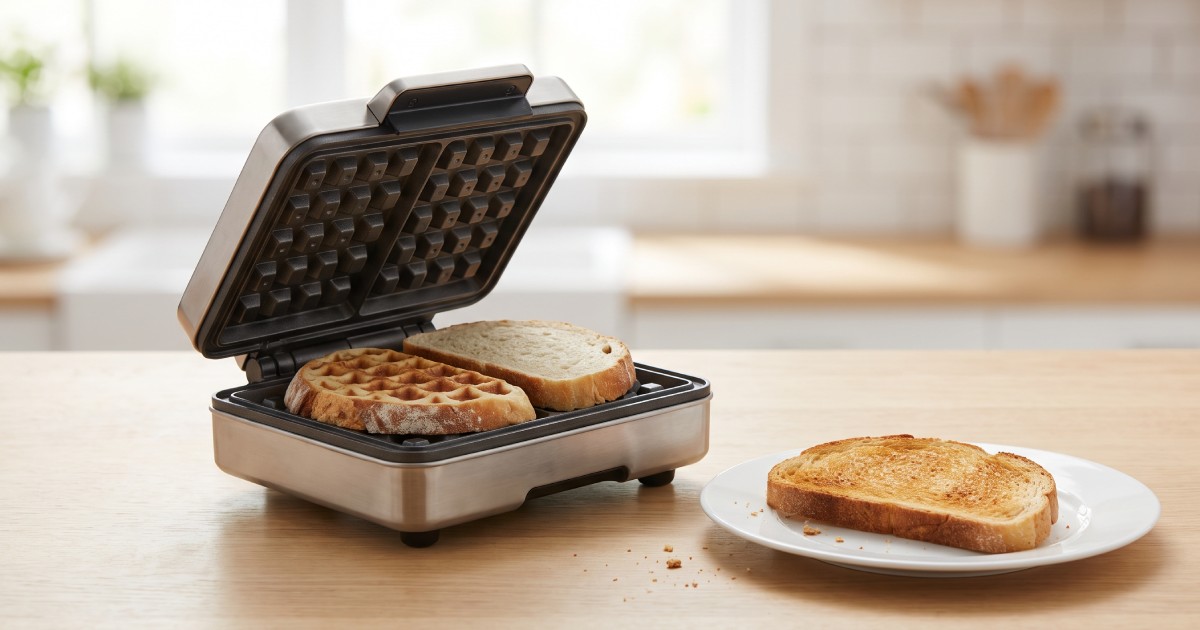
The short answer is yes—a waffle maker can toast bread in a pinch, and it’ll even give your toast a fun grid pattern. But it’s not a perfect substitute for a dedicated toaster, and there are a few things you need to know before you try it, especially around timing, texture, and cleanup.
I’ve tested this exact question across half a dozen waffle irons—from basic $25 flip models to $150 Belgian machines—and the results vary more than you’d expect. Let’s break down exactly how it works, when it’s worth doing, and when you’re better off waiting for a real toaster.
How Waffle Makers Toast Bread (And Why It’s Different From a Toaster)
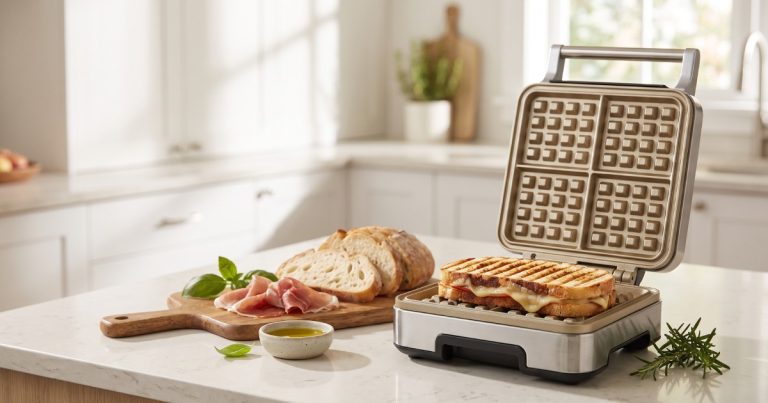
A toaster works by suspending bread vertically between two heating elements that radiate dry heat evenly across both sides. A waffle maker works completely differently: it presses bread between two hot plates using direct contact heat, similar to a panini press or sandwich grill.
This distinction matters for three reasons:
- Compression — Waffle plates clamp down, flattening your bread rather than leaving it fluffy
- Grid marks — Non-stick plate ridges leave deep grooves instead of an even golden surface
- Heat distribution — Contact heat toasts unevenly compared to a toaster’s radiant heat, so the crust can brown faster than the center warms through
If you’re asking can I use a waffle maker to toast bread because your toaster died, know that you’ll get toasted bread—just not toaster-style toast. Think “grilled bread” more than “classic toast.”
Step-by-Step: How to Toast Bread in a Waffle Maker
If you’re going to try it, technique matters. Here’s the method I’ve refined through repeated testing:
- Preheat fully. Don’t skip this. Most waffle irons take 3–5 minutes to reach cooking temperature, and cold plates will make your bread soggy instead of crisp.
- Lightly grease or skip it, depending on your machine. Newer non-stick plates (ceramic or Teflon-coated) don’t need oil. Older or lower-end models benefit from a light brush of butter or spray oil to prevent sticking.
- Place bread flat, close the lid gently. Don’t slam it—this can crack drier breads like sourdough.
- Toast for 1.5–3 minutes. Check at the 90-second mark. Wattage makes a big difference here (more on that below).
- Check doneness by lifting the lid slightly, not by timer alone, since every machine runs hot or cool relative to its dial.
Pro tip: Denser breads (sourdough, whole wheat, sandwich bread) hold up better than airy breads (Wonder Bread-style white, brioche), which can compress too thin and burn at the edges before the center crisps.
Does Wattage and Plate Type Actually Matter?
Yes—significantly. Here’s what I’ve found testing across wattage ranges:
| Wattage | Toasting Result |
|---|---|
| 700–800W (budget flip models) | Slower, uneven toasting; 3+ minutes needed |
| 1000–1200W (mid-range Belgian) | Solid, even toasting in 2 minutes |
| 1400W+ (premium rotating models) | Fast, café-style char in under 90 seconds—watch closely to avoid burning |
Plate material matters just as much as wattage:
- Non-stick aluminum plates — Most common, easy cleanup, good for occasional toast-hacking
- Ceramic-coated plates — Heat more evenly, less prone to hot spots, easier to wipe clean
- Cast iron plates — Retain heat longest, best for deep, even toasting, but heavier and slower to preheat
If toasting bread is a regular use case for you (not just an emergency backup), a mid-range Belgian waffle maker with ceramic plates in the 1000–1200W range will give you the most toaster-like results.
Belgian vs. Classic vs. Flip: Which Style Toasts Best?
Not all waffle makers are created equal when it comes to double-duty toasting:
- Classic (thin-plate) waffle makers toast bread most evenly since the plates are shallower and closer together, mimicking a panini press more closely.
- Belgian (deep-pocket) waffle makers create dramatic grid marks and can compress bread too aggressively, leaving thin, over-toasted edges around thick, doughy centers.
- Flip/rotating waffle makers distribute batter (and heat) more evenly thanks to gravity, which translates into more consistent toasting than fixed models.
- Stovetop waffle irons (no electric element) require constant attention and are the least reliable for toasting—skip these if toast is your goal.
If you’re a first-time buyer shopping with dual-purpose use in mind, lean toward a classic or flip-style electric model over a deep-pocket Belgian iron.
Common Mistakes to Avoid
Even experienced home cooks trip up here. Watch for these:
- Not preheating — Cold plates cause sticking and sogginess
- Using butter instead of oil for greasing — Butter’s milk solids burn faster than the bread toasts, leaving a bitter taste
- Walking away — Waffle makers lack a pop-up timer or auto-shutoff like toasters, so bread can go from golden to charred in under 30 seconds
- Trying it with frozen bread — This nearly guarantees a soggy center and burnt exterior; always thaw first
- Using it for buttered or filled bread — Fillings melt into the plates and are a nightmare to clean, especially on textured non-stick surfaces
When You Should (and Shouldn’t) Use a Waffle Maker as a Toaster
It makes sense when:
- You’re traveling, camping, or in a dorm/rental without toaster access
- Your toaster is broken and you need a temporary fix
- You’re making a grilled-cheese-meets-toast hybrid and want the pressed texture on purpose
- You’re a waffle enthusiast experimenting with your machine’s versatility
It doesn’t make sense when:
- You toast bread daily (the grid marks and compression get old fast, and dedicated toasters are cheap)
- You want soft-centered toast for delicate spreads like poached eggs or avocado
- You’re toasting bagels (the pocket depth on Belgian irons crushes them)
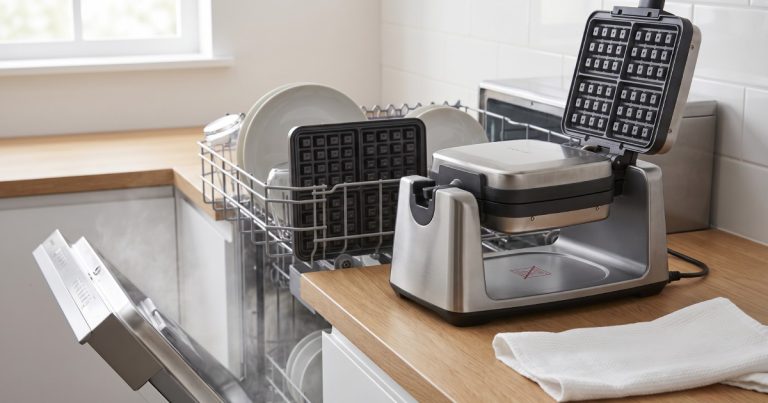
- Cleanup time matters to you—toasters need a crumb tray shake, waffle makers need a full plate wipe-down
Buyer’s Checklist: If You Want a Waffle Maker That Doubles as a Toaster
If dual functionality genuinely matters to your purchase decision, here’s what to prioritize:
- Non-stick or ceramic plates for easy release and cleanup
- 1000W or higher for faster, more even toasting
- Shallow or classic-style plates rather than deep Belgian pockets
- Adjustable temperature dial so you can lower heat specifically for bread
- Cool-touch handles for safety during frequent lid-checking
- Compact storage size if counter space is limited (relevant for [best compact kitchen appliances for small spaces])
Cleaning Tips After Toasting Bread
Bread crumbs behave differently than waffle batter in your machine’s grooves:
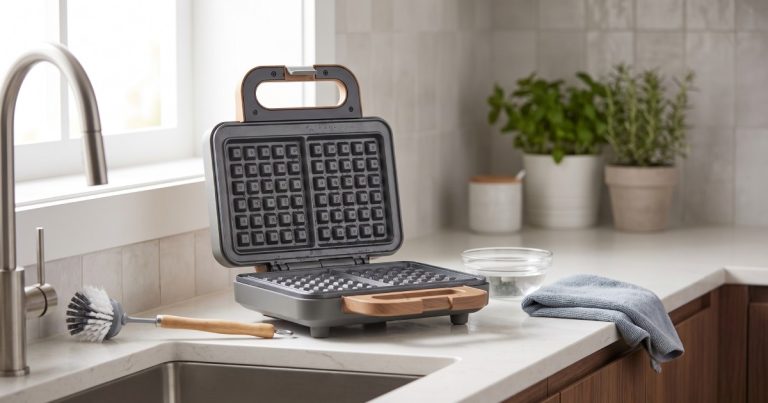
- Let plates cool slightly (not fully) before wiping—crumbs release easier when the surface is warm, not hot or cold
- Use a soft-bristle brush to get crumbs out of ridges without scratching non-stick coating
- Avoid metal utensils entirely; they’ll shred non-stick surfaces over time
- For stubborn residue, a barely damp cloth works better than soaking, which can damage electrical components on non-removable-plate models
For more on extending the life of your machine, check out our guide to [waffle maker cleaning and maintenance tips].
FAQ: Can Waffle Maker Be Used to Toast Bread?
Can I use a waffle maker to toast bread every day?
You can, but it’s not ideal for daily use. The grid pattern, longer toasting time, and manual monitoring (no auto pop-up) make it less convenient than a dedicated toaster for routine breakfasts.
Will toasting bread damage my waffle maker?
No, as long as you avoid metal utensils and don’t let crumbs burn onto the plates repeatedly. Regular cleaning after each use prevents residue buildup.
Can you toast a bagel in a waffle maker?
Yes, but results vary by iron depth. Classic, shallow-plate models toast bagels more evenly; deep Belgian pockets tend to crush and compress them too much.
Do I need to grease the waffle maker before toasting bread?
It depends on your plates. Non-stick ceramic or Teflon-coated plates usually don’t need it. Older or basic models benefit from a light oil spray to prevent sticking.
Why is my toast unevenly browned in a waffle maker?
This usually comes down to hot spots from uneven preheating or plates that haven’t fully reached temperature. Always wait for the ready indicator light before adding bread.
Is toasting bread in a waffle maker safe?
Yes, it’s safe as long as you monitor it closely—waffle makers don’t have a timer or auto-shutoff like toasters, so unattended bread can burn quickly.
The Bottom Line
So, can a waffle maker be used to toast bread? Absolutely—it’s a handy backup method when preheated properly, using the right bread type, and watched closely since there’s no pop-up timer to save you. It won’t replace a dedicated toaster for daily use, but for travel, emergencies, or a fun grilled-texture twist on your morning toast, it gets the job done.
If you’re in the market for a machine that handles both waffles and toast duty well, look for a classic-style, non-stick, 1000W+ model with an adjustable dial. And if you’re curious how your current waffle maker stacks up, check out our [waffle maker buying guide for first-time owners] for model-specific recommendations.
Got a waffle maker toast hack of your own? Drop it in the comments—we love hearing how home cooks put their appliances to creative use.