Can a Waffle Maker Be Used as a Panini Press?
If you’ve ever stared at your waffle iron on a Tuesday afternoon and thought, “I really want a grilled panini right now, but I don’t want to buy another appliance,” you’re not alone. It’s one of the most common questions I get asked in kitchen gear forums and reader emails: can a waffle maker be used as a panini press?
The short answer is yes, a waffle maker can work in a pinch as a makeshift panini press—but it’s not a perfect substitute, and knowing the differences will save you a soggy sandwich (or a scorched one). Let’s break down exactly how it works, where it falls short, and how to get the best results if you decide to try it.
Why People Ask “Can You Use a Waffle Maker as a Panini Press?”
The appeal is obvious. Both appliances use hinged, heated plates that press food from top and bottom. Both rely on direct contact heat to melt cheese, crisp bread, and create attractive markings. If you already own a waffle maker, buying a second single-purpose appliance for panini night can feel unnecessary—especially if kitchen counter space and cabinet storage are tight.
For home cooks and first-time buyers furnishing a first apartment, or waffle enthusiasts looking to get more mileage out of a single appliance, this cross-functionality question comes up constantly. And honestly, it’s a fair one to ask.
How Waffle Makers and Panini Presses Actually Differ
Before you clamp your ciabatta into your Belgian waffle maker, it helps to understand what separates the two appliances at a design level.
Plate Shape and Surface Texture
This is the biggest functional difference:
- Waffle makers have deep, grid-patterned plates (often ½ to 1 inch deep on Belgian-style models) designed to hold batter in individual pockets.
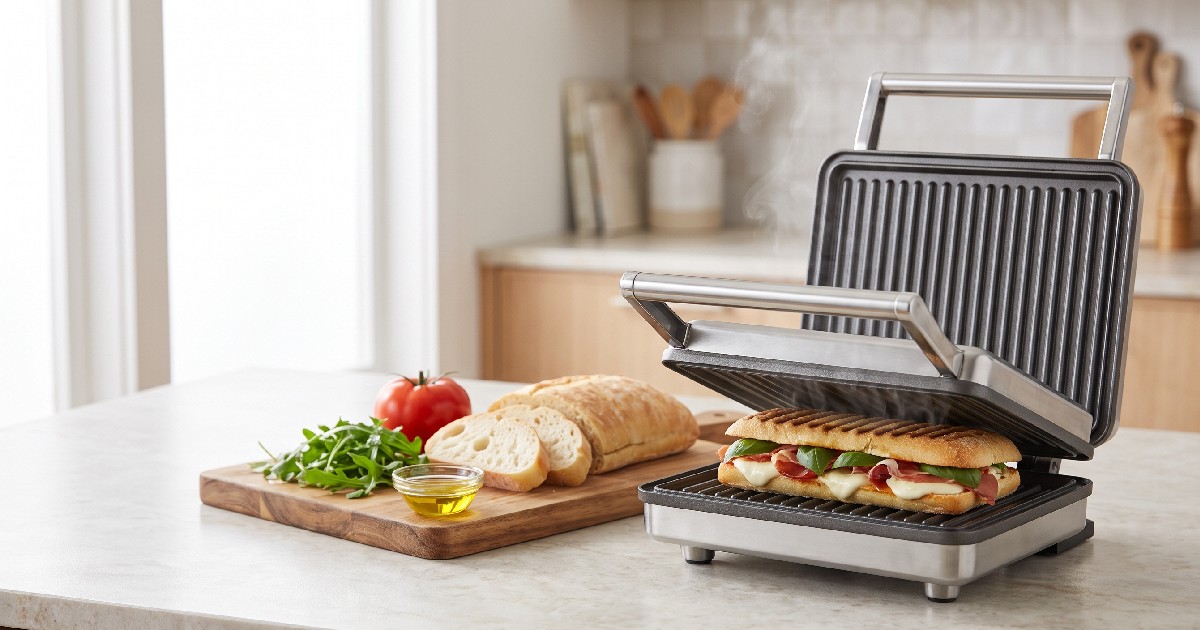
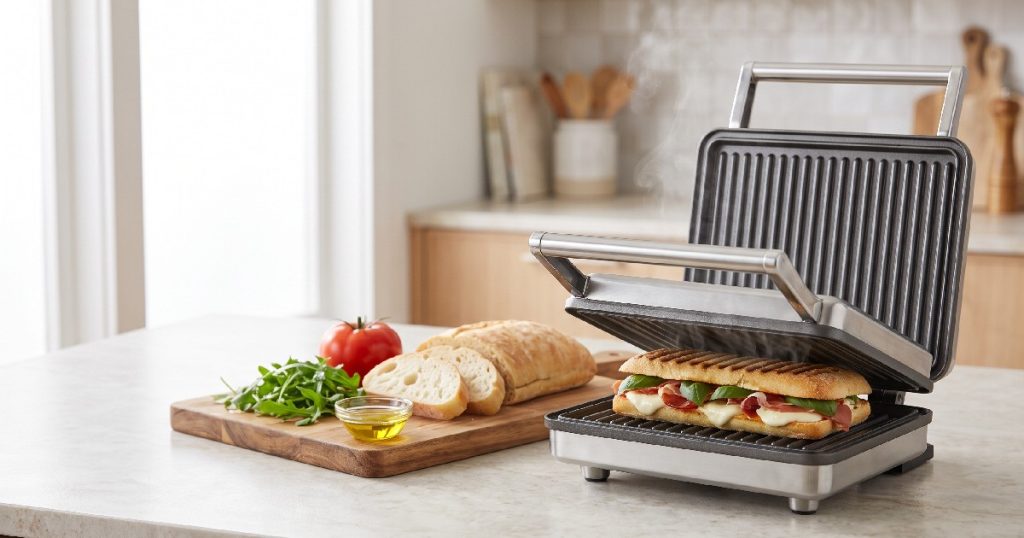
- Panini presses use shallow, flat or lightly ridged plates designed for even, direct contact with bread.
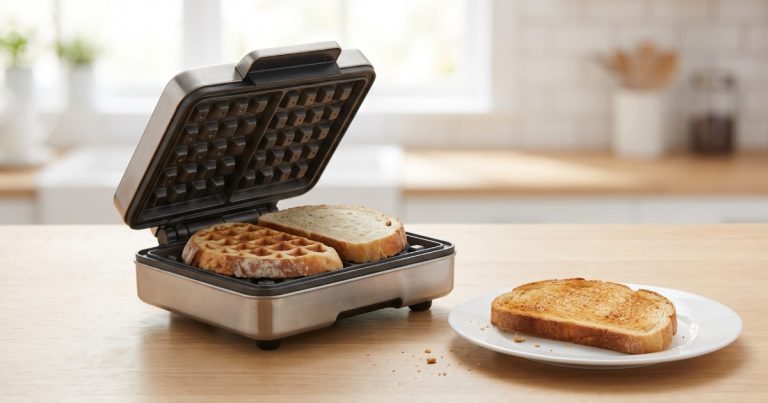
Because waffle grids are so deep, a sandwich pressed in a waffle maker won’t get that classic panini crust. Instead, the bread will take on a grid-stamped, waffle-textured surface—which some people actually enjoy, but it’s not a true panini result.
Hinge Design and Floating Plates
Quality panini presses typically feature a floating top plate (sometimes with adjustable hinges) that adapts to uneven sandwich thickness—thick ciabatta on one side, thinner focaccia on the other. Most waffle makers have a fixed hinge built for uniform batter distribution, not variable-height fillings. This means a thick sandwich may not get even contact across the whole surface, leaving the center undercooked while the edges char.
Temperature Range and Control
Waffle makers are calibrated for batter—typically in the 325°F–375°F range with browning-level dials rather than precise degree settings. Panini presses often run hotter (up to 400°F+) with more emphasis on searing bread quickly. Lower heat on a waffle maker means longer press times, which increases the risk of soggy or gummy bread.
Wattage and Heat Distribution
Most home waffle makers fall between 800–1400 watts, similar to entry-level panini presses. However, panini press heating elements are usually positioned for edge-to-edge searing, while waffle maker elements are optimized to fully cook batter through—prioritizing internal heat over surface crisping.
So, Can I Use a Waffle Maker as a Panini Press? Here’s My Honest Take
After testing this exact swap across several appliance types—flip Belgian makers, classic non-flip models, and compact single-waffle irons—here’s my verdict: it works as an occasional substitute, not a long-term solution.
If you’re making a quick grilled cheese or a thin deli sandwich for one, a waffle maker will get the job done reasonably well. If you’re regularly making thick, multi-ingredient paninis for a family of four, you’ll notice the limitations fast—uneven pressing, waffle-grid bread texture, and longer cook times that can dry out fillings.
When It Works Well
- Thin sandwiches (deli meat, cheese, light spreads)
- Grilled cheese with standard sandwich bread
- Occasional use, not daily meal prep
- You don’t mind a waffle-textured crust
When It Doesn’t Work Well
- Thick artisan bread (ciabatta, focaccia)
- Sandwiches with bulky fillings (roasted vegetables, thick-cut chicken)
- You want a traditional flat, seared panini crust
- You’re cooking multiple sandwiches back-to-back (recovery time between presses is slower on many waffle makers)
Step-by-Step: How to Use a Waffle Maker as a Panini Press
If you’re going to try it, doing it properly will make a noticeable difference in your results.
- Preheat fully. Don’t rush this step—an underheated waffle maker will steam your sandwich instead of searing it, leading to soggy bread.
- Butter or oil the bread exterior, just as you would for a skillet panini. This helps compensate for the waffle maker’s non-stick coating, which is usually engineered for batter release, not bread crisping.
- Keep fillings thin and evenly distributed. Avoid piling ingredients unevenly, since fixed-hinge waffle makers can’t adjust to lopsided thickness.
- Close gently and check at the halfway mark. Because grid depth varies by model, timing can differ significantly from a flat press—start checking at 3–4 minutes rather than trusting a panini recipe’s timing exactly.
- Let it rest 1–2 minutes before cutting. This allows melted cheese to set slightly, preventing a filling blowout when you slice.
Pro tip: If your waffle maker has adjustable browning settings, start on a medium setting rather than the highest. Panini bread crisps faster than waffle batter cooks through, so high heat can burn the exterior before the inside is warmed.
Common Mistakes to Avoid
- Overfilling the sandwich. Thick fillings won’t press evenly and can leak out through the grid pattern.
- Skipping the preheat. A cold or lukewarm plate leads to greasy, unevenly cooked bread.
- Using delicate bread. Soft sandwich bread can tear or stick in deep waffle grooves—sturdier bread like sourdough holds up better.
- Forgetting to oil the plates, even on non-stick models—cheese runoff is notorious for sticking in waffle grid crevices.
- Cranking the heat too high in an attempt to mimic panini press speed, which often results in burnt ridges and a cold center.
Waffle Maker Styles: Which One Handles Panini Duty Best?
Not all waffle makers are created equal when it comes to sandwich duty. Here’s how the common styles stack up:
| Style | Panini Performance | Why |
|---|---|---|
| Classic (non-Belgian) waffle maker | Best of the bunch | Shallower grids mean more even bread contact |
| Belgian waffle maker (deep grid) | Fair | Deep pockets create heavy grid marks and uneven pressure |
| Rotating/flip waffle maker | Good for browning | Rotation helps distribute heat, but hinge is still fixed |
| Flat-plate hybrid/multi-cooker | Excellent | Interchangeable flat plates essentially convert it into a real press |
If you’re a gift shopper or first-time buyer specifically hoping for multi-use functionality, a hybrid grill/griddle/waffle combo appliance with interchangeable plates is genuinely worth the extra $20–40 over a single-purpose waffle maker. These typically run $50–$120 depending on brand and wattage, versus $30–$60 for basic waffle-only models.
Buyer’s Checklist: If You Want One Appliance for Both Jobs
If the waffle-maker-as-panini-press question keeps coming up in your kitchen, consider shopping for a multi-purpose appliance instead of forcing a single-use one to do double duty. Look for:
- ✅ Interchangeable or reversible plates (flat side for panini, ridged/grid side for waffles)
- ✅ Floating hinge for adjusting to sandwich thickness
- ✅ Adjustable temperature dial (not just light/dark browning settings)
- ✅ Easy-clean non-stick coating (ceramic-based coatings tend to outlast standard Teflon-style coatings for repeated sandwich use)
- ✅ Compact vertical storage design if counter space is limited
This single purchase decision solves the “can I use a waffle maker as a panini press” dilemma permanently, rather than compromising on both foods every time.
(Internal link opportunity: “See our full guide to the best multi-plate waffle and grill combos”)
FAQ: People Also Ask
Can you use a waffle maker as a panini press?
Yes, technically you can use a waffle maker as a panini press, especially for thin sandwiches. However, the deep grid pattern will leave waffle-shaped marks on your bread rather than a traditional flat panini crust, and the fixed hinge may not press thicker sandwiches evenly.
Can I use a waffle maker as a panini press without ruining my bread?
You can minimize damage by using sturdier bread (like sourdough or ciabatta), oiling the exterior before pressing, and keeping fillings thin. Delicate white sandwich bread is more likely to tear or stick in the deep grid grooves.
Will a waffle maker get hot enough for a panini?
Most waffle makers reach 325°F–375°F, which is generally hot enough to melt cheese and toast bread, though it may take slightly longer than a dedicated panini press that runs closer to 400°F.
Does using a waffle maker for sandwiches ruin it for waffles?
No, as long as you clean the plates thoroughly after each sandwich use—oil, cheese, and crumbs can build up in the grid pattern and affect future waffle batter release if not cleaned promptly.
What’s a good alternative if my waffle maker doesn’t work well for panini?
A flat-plate skillet with a heavy pan or bacon press on top is a reliable stovetop alternative, or investing in a multi-plate combo appliance solves the problem for good.
Are there waffle makers designed to double as panini presses?
Yes—look for reversible or interchangeable plate models, which include a flat plate specifically designed for sandwiches, burgers, and paninis alongside the standard waffle grid.
Final Takeaway
So, can a waffle maker be used as a panini press? In a pinch, absolutely—it’ll melt your cheese and toast your bread. But if panini night is a regular occurrence in your house, the deep grid pattern, fixed hinge, and lower searing heat mean you’re compromising on texture and evenness every time.
For occasional use, follow the preheating, oiling, and thin-filling tips above and you’ll get a perfectly respectable sandwich. For frequent panini lovers, a multi-plate hybrid appliance is the smarter long-term investment—giving you real waffles and real paninis without asking one appliance to be something it wasn’t quite built for.