Can You Make Waffles Ahead of Time and Reheat Them?
If you’ve ever stood at the waffle iron at 6:45 a.m. trying to get four kids fed before the bus arrives, you already know the real question isn’t “how do I make waffles” — it’s “how do I make waffles without doing it every single morning.” The good news: yes, you can make waffles ahead of time and reheat them, and when you do it right, they come out just as crisp and golden as they were fresh off the iron.
As someone who has tested dozens of waffle makers and made more batches of batter than I can count, I can tell you the difference between a soggy, sad reheated waffle and a genuinely great one comes down to a handful of specific steps — not luck. This guide walks through exactly how to store, freeze, and reheat waffles so breakfast stops being a daily production.
Can You Make Waffles Ahead of Time?
Absolutely. Waffles are one of the most freezer- and fridge-friendly breakfast foods you can make, right alongside pancakes. The key is understanding what actually happens to a waffle after it cools: the starches in the batter firm up, and moisture redistributes through the waffle. If you skip proper cooling and storage, that moisture is exactly what turns your reheated waffle limp instead of crisp.
Here’s the short version of what works:
- Refrigerator storage: good for 3–5 days, best for waffles you’ll eat within the week
- Freezer storage: good for up to 2–3 months, best for meal-prepping breakfast in bulk
- Reheating in a toaster, oven, or air fryer: restores crispness far better than a microwave
If you’re cooking for a family of four and going through a dozen waffles a week, batch-cooking on a Sunday and reheating through the week is genuinely one of the most time-saving breakfast habits you can build.
Can I Make Waffles Ahead of Time for a Crowd or Event?
Yes — and this is where make-ahead waffles really shine. If you’re hosting brunch, feeding a houseful of overnight guests, or prepping for a holiday morning, making waffles the day before (or even a few days before) saves you from being stuck at the iron while everyone else is eating.
A few practical notes from testing this scenario repeatedly:
- Cook waffles slightly under, not over. Pull them a minute before your usual “done” point — they’ll finish crisping in the reheat.
- Cool completely before stacking. Stacking warm waffles traps steam, which is the single biggest cause of soggy reheats.
- Reheat in batches close to serving time, not all at once an hour early, so they don’t sit and soften again.
How to Store Waffles Properly (Fridge Method)
If you’re eating your make-ahead waffles within the next few days, the refrigerator is the simplest option.
Steps:
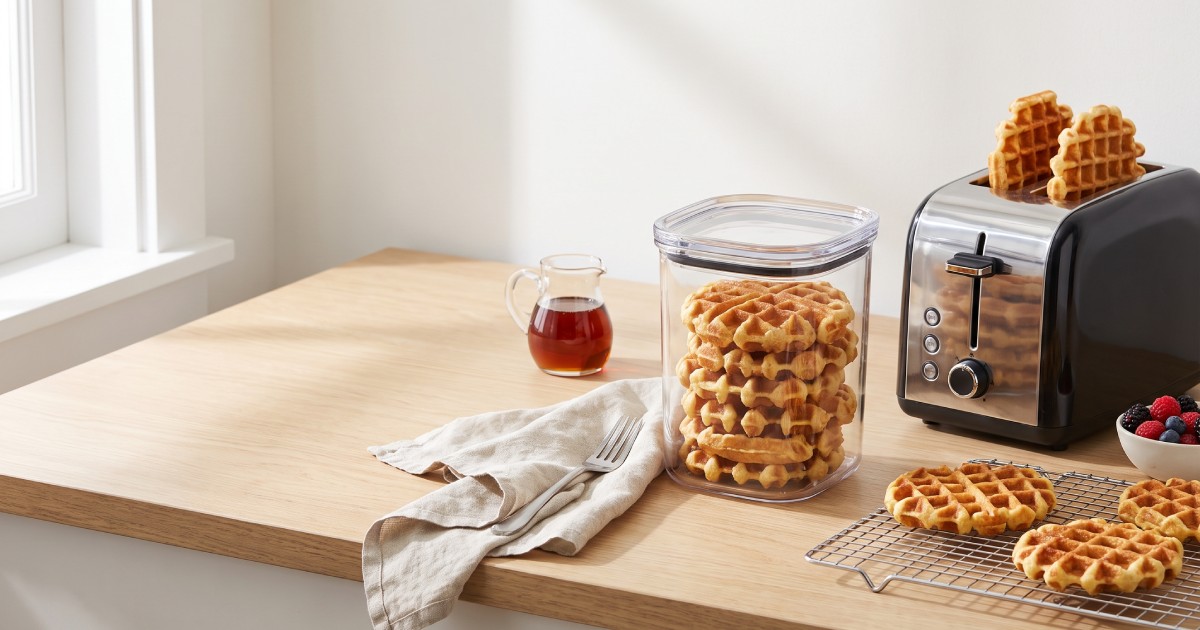
- Let waffles cool completely on a wire rack — not stacked on a plate, which traps steam underneath
- Layer them with parchment or wax paper between each waffle if stacking
- Store in an airtight container or resealable bag
- Refrigerate for up to 3–5 days
The wire rack step matters more than people expect. A waffle cooling flat on a plate steams itself on the bottom, and that trapped moisture is what makes day-two waffles taste rubbery instead of crisp.
Can You Make Waffles and Freeze Them?
Yes — and freezing is actually the better option if you’re making a big batch, since it locks in freshness far longer than the fridge without sacrificing texture, as long as you freeze them the right way.
How to freeze waffles (step-by-step):
- Cook waffles as usual and let them cool completely on a wire rack — do not skip this step
- Arrange waffles in a single layer on a baking sheet lined with parchment paper
- Flash-freeze for 1–2 hours until firm
- Transfer to a freezer-safe bag or airtight container, separating layers with parchment paper
- Label with the date and use within 2–3 months for best texture and flavor
The flash-freeze step is what keeps your waffles from fusing into one giant waffle brick. It takes an extra hour, but it means you can grab exactly one or two waffles at a time instead of thawing the whole batch.
Can I Make Waffles and Freeze Them From Any Recipe?
Most waffle recipes freeze well, but batter consistency matters more than people realize. Waffles made from a yeasted batter (like classic Belgian waffle recipes) tend to hold up slightly better in the freezer than very thin, delicate batters, because they have more structure to begin with.
A few tips based on hands-on testing:
- Slightly thicker batter produces a sturdier waffle that reheats more evenly
- Avoid overloading batter with mix-ins like blueberries if you plan to freeze — the extra moisture can make thawed waffles soggier
- Whole-grain or buttermilk waffles freeze particularly well thanks to their denser crumb
The Best Way to Reheat Waffles (And What to Avoid)
This is the part people get wrong most often. How you reheat a waffle matters just as much as how you store it.
Toaster (Best for Frozen or Fridge Waffles)
Pop the waffle directly into the toaster on a medium setting. This is the fastest way to recrisp the outside while warming the inside, and it’s why frozen waffle brands design their product specifically for toaster reheating.
Oven (Best for Reheating a Large Batch)
- Preheat oven to 350°F
- Place waffles directly on the oven rack or a baking sheet
- Heat for 8–10 minutes if refrigerated, 10–15 minutes if frozen
- Flip halfway through for even crisping
This method is ideal when you’re feeding a crowd and need six or eight waffles ready at once.
Air Fryer (Best for Crispness)
- Set to 350°F
- Reheat for 3–5 minutes, flipping once
- Works well straight from frozen, no thawing needed
Of all the methods I’ve tested side by side, the air fryer consistently produces the crispest exterior with the least effort — it’s become the go-to method in most modern kitchens for exactly that reason.
Microwave (Avoid If You Can)
The microwave is the fastest option, but it’s also the one most likely to leave you with a soft, chewy waffle instead of a crisp one, since it heats moisture from the inside out without ever crisping the surface. If it’s your only option, microwave for 30–45 seconds, then finish for 1–2 minutes in a toaster or toaster oven to bring back some crispness.
Common Mistakes That Ruin Make-Ahead Waffles
- Stacking waffles while still warm — traps steam and guarantees sogginess
- Skipping the flash-freeze step — waffles freeze into a solid block that’s hard to portion
- Reheating from frozen in the microwave — uneven heating, soggy texture
- Over-cooking the first time around — leaves no room for the reheat to crisp things up without drying the waffle out
- Storing waffles with syrup already on them — adds moisture that makes reheating far less effective
Quick Reference: Storage and Reheating Checklist
- Cool waffles completely on a wire rack before storing
- Choose fridge (3–5 days) or freezer (2–3 months) based on timeline
- Flash-freeze in a single layer before bagging, if freezing
- Separate layers with parchment paper to prevent sticking
- Reheat in a toaster, oven, or air fryer — skip the microwave when possible
- Add syrup and toppings only after reheating, never before storing
FAQ: Making Waffles Ahead of Time
Can you make waffles ahead of time and reheat them the next day? Yes. Waffles stored in the refrigerator overnight in an airtight container reheat well the next morning, especially using a toaster or oven.
Can you make waffles the night before for breakfast? Yes — this is one of the most common ways people use make-ahead waffles. Cook them, cool completely, refrigerate overnight, and reheat in the morning using a toaster or oven for the best texture.
How long can you keep waffles in the fridge before they go bad? Properly stored waffles typically stay fresh in the refrigerator for 3–5 days. After that, texture and flavor start to decline even if they’re technically still safe to eat.
Do frozen waffles taste as good as fresh ones? When frozen and reheated correctly — flash-frozen individually, then reheated in a toaster, oven, or air fryer — frozen waffles come very close to fresh, especially in crispness. The biggest quality drop happens when waffles are microwaved straight from frozen.
Can you reheat waffles without a toaster? Yes. An oven or air fryer works just as well, and in some cases produces even crisper results than a toaster, especially for reheating multiple waffles at once.
Is it better to freeze waffle batter or freeze cooked waffles? Freezing cooked waffles is generally more convenient and produces more reliable results. Waffle batter can lose some of its rise and texture in the freezer, while fully cooked waffles reheat predictably.
Final Thoughts
Making waffles ahead of time isn’t a compromise — done right, it’s genuinely one of the smartest breakfast habits you can build into a busy week. Cool your waffles completely, store them properly in the fridge or freezer, and reheat with a toaster, oven, or air fryer instead of a microwave, and you’ll get results that taste freshly made.
Whether you’re meal-prepping for a family of four or stocking the freezer before a houseful of holiday guests arrives, a little upfront effort on the front end buys you crisp, golden waffles all week long — no waffle iron required on a Tuesday morning.